Handyman flat rate calculator
Turn your hourly rate into a clean flat price for any job: time, trip charge, a buffer for surprises and materials with your markup. Nothing you type leaves your browser.
Turn your hourly rate into a clean flat price for any job: time, trip charge, a buffer for surprises and materials with your markup. Nothing you type leaves your browser.
Run your ten most common jobs through the calculator and write the prices down. That list is your flat rate manual: quote from it on the phone, and update it when your rate changes. Our flat rate pricing guide has a sample sheet and when not to flat-rate, and the handyman price list has typical ranges to sanity-check your numbers.
Rot, leaks and anything behind a wall you can’t see. Quote a diagnosis visit or an hourly rate with a cap, then switch to a flat price once you know the scope.
PlainJob keeps your common jobs and prices as saved items you drop into any quote from the driveway. $39 a month for up to 3 people.
Get early access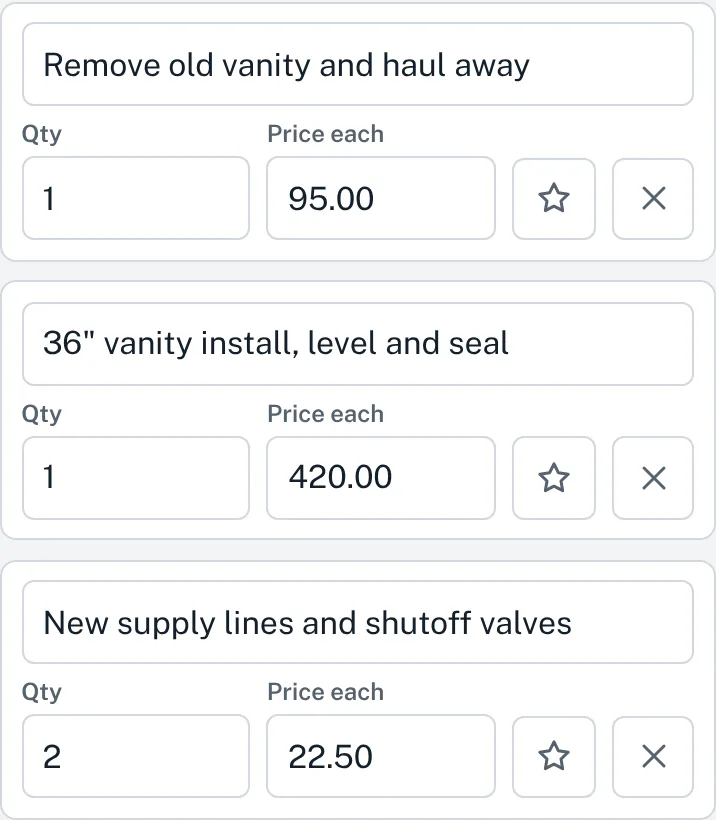
Multiply your hourly rate by the usual time for the job, add a trip charge and a 10 to 20 percent buffer for surprises, add materials with your markup, and round up to a clean number.
Most handymen add 10 to 20 percent of labor. Use the low end for jobs you have done many times and the high end for older homes or jobs where you cannot see inside the wall.
Many handymen add 10 to 20 percent to cover the trip to buy them, returns and waste. Whatever you choose, apply it the same way on every quote.
A list of your common jobs with a set price for each, built from your hourly rate and the usual time. This calculator prices one job at a time; save the results as your price sheet.