Handyman hourly rate calculator
Work out what to charge from your own numbers: the pay you want, what the business costs to run, and the hours you can really bill. Nothing you type leaves your browser.
Work out what to charge from your own numbers: the pay you want, what the business costs to run, and the hours you can really bill. Nothing you type leaves your browser.
Materials aren't in this number. Bill them on top, at cost plus whatever markup you use for picking them up.
A 45-hour week isn't 45 billable hours. Driving between jobs, the hardware store, writing quotes, chasing payments and answering texts all take time nobody pays for by the hour. Track a few weeks honestly. If you bill 25 hours instead of 30, the same income needs a rate about 20% higher.
The fastest way to raise what you earn is often to bill more of the hours you already work: group jobs by neighborhood, quote the same day, and spend less time on paperwork.
Most customers want a price for the job, not a meter running. Estimate the hours, multiply by your rate, add materials, and round to a clean number. Put it on a quote with line items so the customer can see what they're paying for. Try the free handyman quote maker.
PlainJob turns quoting, scheduling and invoicing into a few taps from the driveway, so less of your week goes unpaid. Save your common jobs with your prices and drop them into any quote. $39 a month for up to 3 people.
Get early access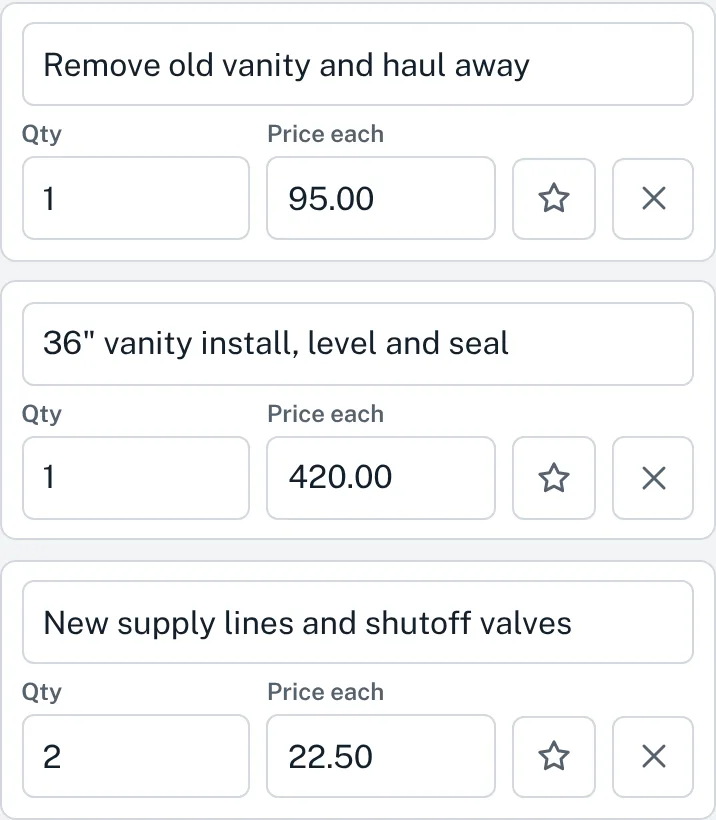
Enough to cover your business costs, the taxes you owe, and the take-home pay you want, spread over the hours you can actually bill. Use the calculator above with your own numbers; the answer differs a lot by area and by how many hours you really fill.
Hours you're doing paid work at a customer's place. Driving, buying materials, quoting, and paperwork are real work but usually not billed by the hour, so most solo pros bill 25 to 32 hours in a 45-hour week. Count yours honestly for a few weeks.
Most handymen do, often one hour or a set trip charge, because driving to a 15-minute job costs you the same as driving to a 2-hour one. The calculator shows your one-hour rate as a starting point for that minimum.
Customers usually prefer a flat price per job. Use your hourly rate to build it: estimate the hours, multiply, then add materials. The quote shows the job price; your hourly rate stays your private math.
No. It's a rough share to put aside for income and self-employment taxes. Ask an accountant for the right number for you; this is not tax advice.